
Expert Pre-Wiring for Home Theater: A Step-by-Step Guide
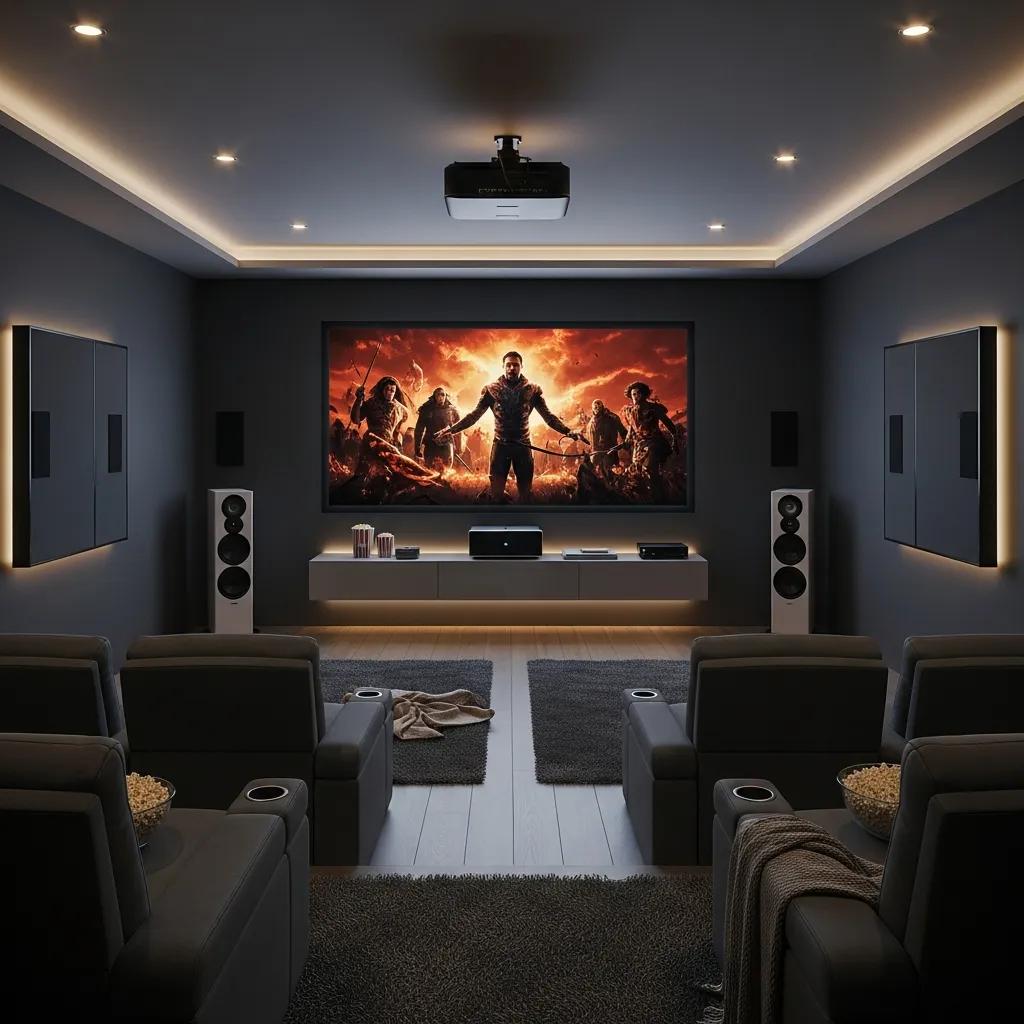
7 Essential Steps to Professional Home Theater Wiring in Phoenix Homes: A Complete Guide to Expert Installation and Cost Management
Creating a professional home theater in Phoenix requires careful planning and execution, particularly when it comes to wiring. This guide outlines the seven essential steps to ensure your home theater is wired for optimal performance, providing you with a comprehensive understanding of the process. From selecting the right cables to understanding electrical requirements, this article will equip you with the knowledge needed to achieve a seamless installation. Many homeowners face challenges with audio and visual quality due to improper wiring, but by following these steps, you can avoid common pitfalls and enhance your viewing experience. We will cover key planning considerations, cable selection, electrical requirements, and the importance of professional installation, ensuring you have a complete roadmap for your home theater project.
What Are the Key Planning Considerations for Home Theater Wiring in Phoenix?
Planning is crucial for a successful home theater installation. It involves understanding the layout, room features, and future upgrade possibilities. A well-thought-out plan ensures that your home theater not only meets your current needs but can also adapt to future technology advancements.
How to Design Your Home Theater Layout for Optimal Audio and Visual Experience
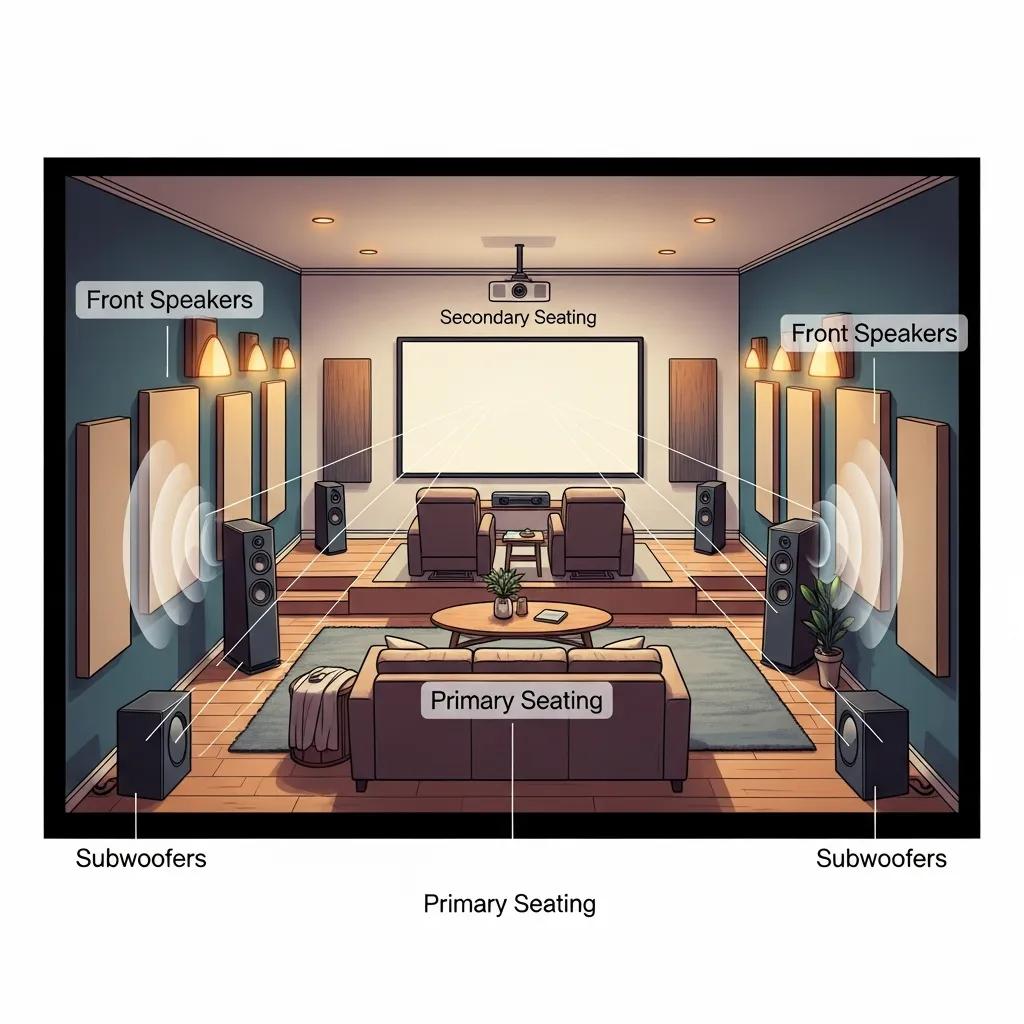
Designing your home theater layout involves strategic placement of speakers and screens to maximize audio and visual quality. Optimal speaker placement is essential; for instance, front speakers should be positioned at ear level when seated, while subwoofers can be placed near corners to enhance bass response. Additionally, consider the viewing distance from the screen, which should be approximately 1.5 to 2.5 times the diagonal size of the screen for the best experience.
Which Room Features Affect Speaker Placement and Wiring Routes?
Room features significantly impact speaker placement and wiring routes. Acoustic considerations, such as wall materials and room shape, can affect sound quality. For example, a room with hard surfaces may create echoes, while soft furnishings can absorb sound. Additionally, obstacles like windows and doors can dictate wiring routes, making it essential to plan accordingly to avoid interference with the audio experience.
How Do You Choose the Right Cables and Structured Cabling Solutions for Phoenix Homes?
Selecting the right cables is vital for ensuring your home theater functions optimally. The choice of cables can affect both the longevity of your system and its compatibility with modern technology.
What Types of Cables Are Best for Longevity and 4K/8K Compatibility?
When it comes to longevity and compatibility with 4K and 8K systems, high-speed HDMI cables rated for HDMI 2.0 or higher are the best choice. They support high-definition video and audio signals, ensuring a seamless experience. Additionally, using high-quality cables can prevent signal degradation over time, making them a worthwhile investment for any home theater setup.
Why Is Structured Cabling Important for Professional Home Theater Wiring?
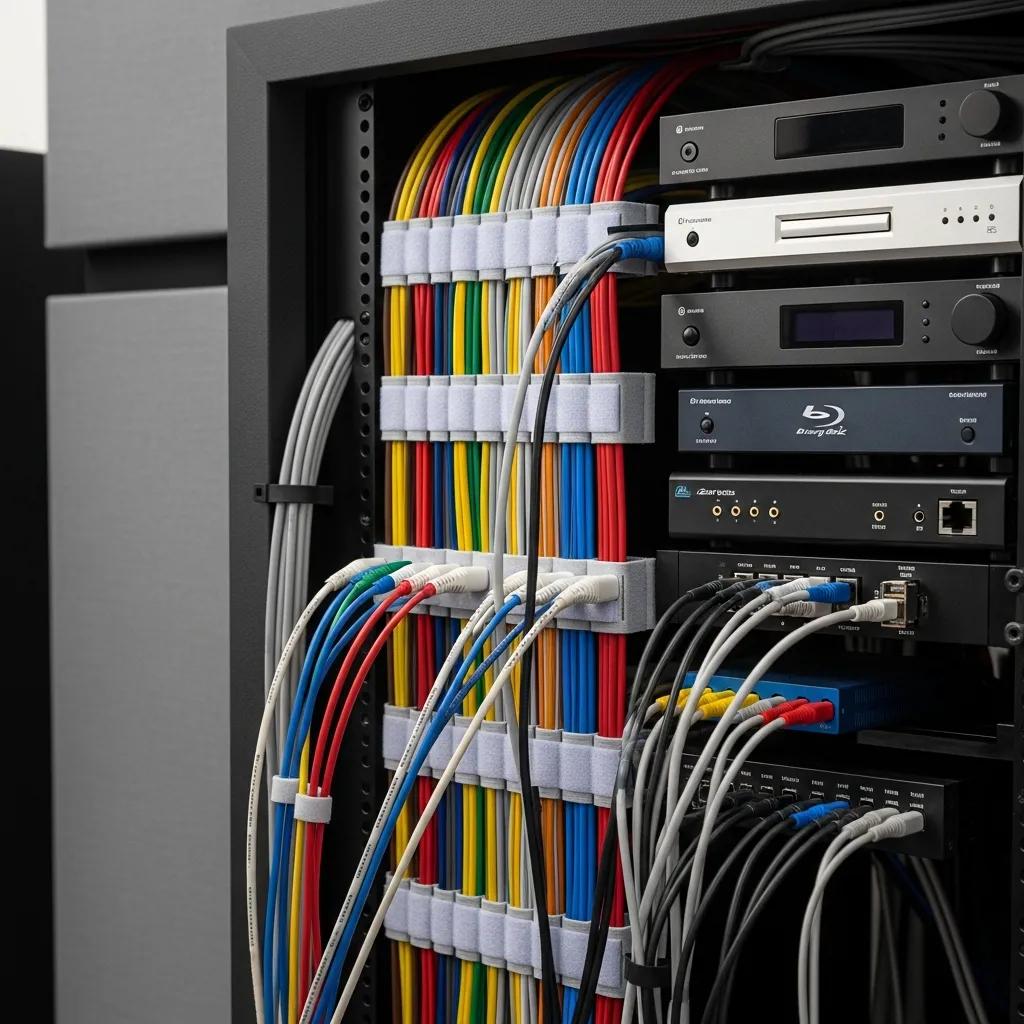
Structured cabling is essential for professional home theater wiring as it provides a systematic approach to managing cables. This method simplifies upgrades and maintenance, allowing for easier access to connections and reducing clutter. Moreover, structured cabling enhances performance by minimizing interference and ensuring that all components communicate effectively.
| Cable Type | Longevity | Compatibility | Recommended Use |
|---|---|---|---|
| HDMI | High | 4K/8K | Video and audio transmission |
| Cat6 | Medium | Networking | Internet and streaming devices |
| Coaxial | High | Cable TV | Television connections |
This table illustrates the different cable types, their longevity, compatibility, and recommended uses, helping you make informed decisions for your home theater wiring.
What Are the Electrical Requirements and Power Distribution Best Practices?
Understanding the electrical requirements for your home theater is crucial for safety and performance. Proper power distribution ensures that your equipment operates efficiently without risk of overload.
How to Ensure Dedicated Circuits and Surge Protection for AV Equipment
To protect your audio-visual equipment, it is essential to use dedicated circuits. This prevents interference from other household appliances and ensures that your system receives consistent power. Additionally, incorporating surge protection devices can safeguard your equipment from voltage spikes, which can cause significant damage.
What Are the Benefits of Using Low Voltage Wiring and Conduits?
Low voltage wiring and conduits offer several advantages for home theater installations. They are safer and easier to install than traditional high-voltage wiring, reducing the risk of electrical hazards. Furthermore, low voltage systems can be more aesthetically pleasing, as they allow for hidden wiring, maintaining the clean look of your home theater.
How Does Professional Installation and Testing Ensure Quality Home Theater Wiring?
Hiring professionals for your home theater wiring is a wise investment. Licensed contractors bring expertise and experience, ensuring that your system is installed correctly and functions as intended.
Why Hire Licensed Contractors for Home Theater Wiring in Phoenix?
Licensed contractors are trained to handle the complexities of home theater wiring. They understand local codes and regulations, ensuring that your installation is compliant and safe. Additionally, their experience allows them to troubleshoot potential issues before they arise, saving you time and money in the long run.
What Are the Steps for System Testing, Calibration, and Post-Installation Support?
After installation, testing and calibration are crucial to ensure optimal performance. Professionals will conduct thorough testing to verify that all components are functioning correctly and will calibrate the system to achieve the best audio and visual quality. Post-installation support is also essential, as it provides you with assistance for any future adjustments or issues that may arise.
In conclusion, following these seven essential steps will help you achieve a professional home theater wiring setup in your Phoenix home. By carefully planning your layout, selecting the right cables, understanding electrical requirements, and hiring licensed professionals, you can create a home theater that delivers an exceptional audio-visual experience for years to come.