
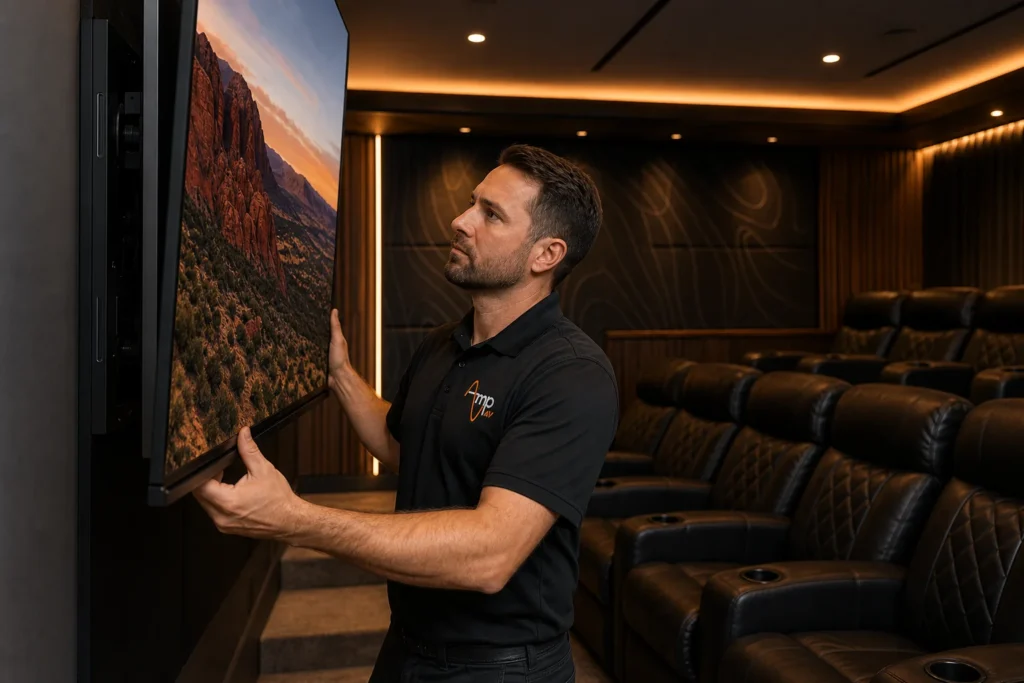
Designing luxury media rooms in Arizona starts with understanding how the desert climate, open floor plans, and custom home architecture shape every decision. The right media room combines acoustic engineering, high-performance displays, and smart home technology into a single cohesive space built around how you actually watch, listen, and live.
What Makes Arizona Media Rooms Unique
Arizona homes present specific design opportunities you won't find in most markets. Paradise Valley estates, Scottsdale custom builds, and Ahwatukee hillside homes often feature large open spaces with high ceilings, stone or tile flooring, and floor-to-ceiling windows. Each of these architectural features directly affects acoustic performance and display placement.
Hard surfaces reflect sound rather than absorbing it. High ceilings create reverb that muddies dialogue. Large windows introduce ambient light that washes out picture quality. Designing around these conditions is not a cosmetic exercise: it is an engineering problem that requires deliberate room design choices before a single piece of equipment is selected.
The Arizona desert lifestyle also extends entertainment outdoors. Many AZ home entertainment systems connect with covered patios, pools, and outdoor spaces so the experience flows naturally from inside to outside. If you love how your living spaces function separately, you will love them even more when they work together.
Acoustic and Visual Planning: The Foundation of Great Media Rooms
The first step in any media room project is a thorough space assessment. Room dimensions, surface materials, and window placement all determine which acoustic treatments are needed and where the screen or projector should go.
Acoustic Treatment
Sound panels, bass traps, and ceiling diffusers are calibrated to the specific room. An untreated room with hard floors and bare walls can have reverberation times that make even top-tier speakers sound muddy. Proper treatment brings RT60 into the 0.3 to 0.5 second range recommended for dedicated home theaters, following guidelines from researcher Floyd Toole in Sound Reproduction (Focal Press, 2018).
Display Technology
Most luxury media rooms in Arizona use either a 4K laser projector with an acoustically transparent screen or a large-format direct-view LED display. The choice depends on ambient light levels, room depth, and how the space is used. A room that doubles as a living area during the day often performs better with a direct-view panel. A dedicated screening room with controlled lighting is the perfect environment for a projector setup that delivers a true cinema experience.
Audio Video Systems: Performance Without Compromise
Home theaters and media rooms live and die by their audio video systems. A reference-grade system in a properly treated room produces sound that is more accurate, more immersive, and more emotionally engaging than anything a standard living room setup can achieve.
Surround Sound Configurations
Dolby Atmos and DTS:X object-based audio add height channels that place sound precisely in three-dimensional space. A 7.1.4 configuration (seven surround speakers, one subwoofer, four ceiling or upward-firing height channels) is a common choice for rooms between 300 and 500 square feet. Larger rooms can scale to 9.2.6 or beyond.
Subwoofer placement matters as much as speaker placement. In-wall and in-ceiling speakers allow a clean aesthetic without sacrificing performance. Amp AV's installation team handles all wiring, conduit, and structural work so that nothing is visible after the build is complete.
Video Calibration
A display is only as good as its calibration. Professional ISF-certified calibration sets accurate color temperature, gamma, and peak brightness levels for the specific room lighting conditions. This step is often skipped in DIY builds and is one of the most meaningful upgrades Amp AV provides as part of every completed media room. Explore our home theater installations service to see what a professional installation includes.
Smart Home Integration: Control Everything From One Place
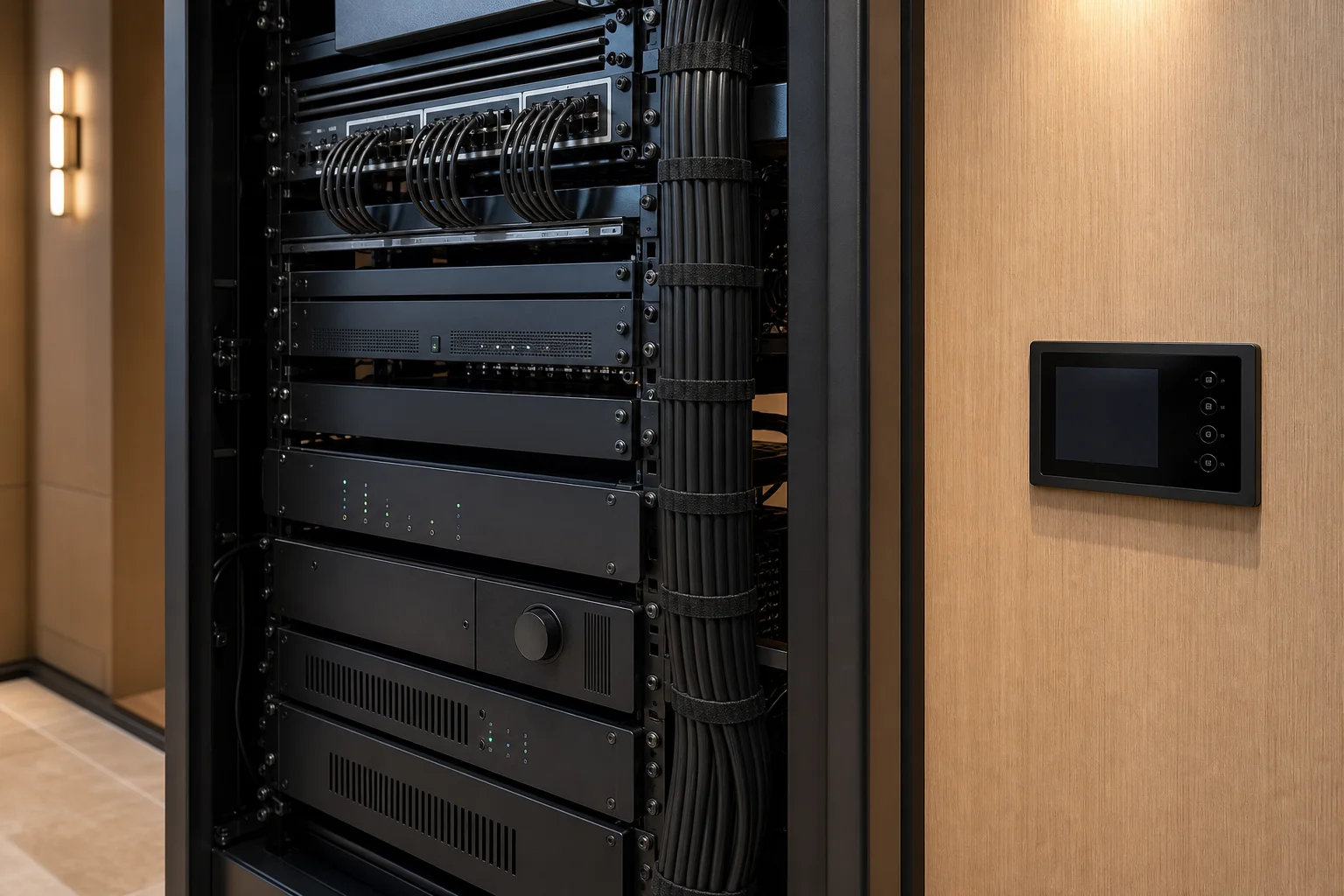
Modern media rooms are not isolated systems. They connect to whole-home audio video networks, lighting scenes, shading, HVAC, and security. A well-designed smart home integration means pressing one button to dim the lights, close the shades, power on the display, and start your content.
Control4, Lutron, and Crestron are the primary platforms Amp AV integrates across Arizona homes. Each offers app-based and physical control options. Lutron's systems are especially popular for lighting control because of their reliability and wide device compatibility.
For clients who want multi-room audio video distribution, Amp AV designs systems that let you send any source to any display or speaker zone in the home. You can view the same game in your media room, kitchen, and outdoor patio simultaneously, or play different content in each space. Learn more about multi-room audio video and how it can bring your entire home together.
The Amp AV Design-to-Install Process
Every media room project follows a structured process that keeps the work on schedule and the results on target.
Discovery and design: We start with a site visit to measure the space, review architectural plans, and understand how you want to use the room. This conversation shapes the equipment list, media room design layout, and budget range.
System design and proposal: Our team produces a detailed design document showing equipment placement, cable runs, acoustic treatment locations, and control system logic. You review and approve before any work begins.
Pre-wire and rough-in: Most of the critical work happens before drywall or finish materials go in. Conduit, speaker wire, HDMI runs, and network cabling are installed and labeled during this phase.
Equipment installation and programming: Displays, processors, amplifiers, speakers, and control systems are installed, configured, and tested together as a complete system.
Calibration and handoff: We calibrate the audio and video to the room, walk you through the control system, and make sure every feature works exactly as designed.
Frequently Asked Questions
How large does a room need to be for a dedicated home theater?
A dedicated home theater can work in spaces as small as 12 by 16 feet. Larger rooms give you more flexibility with seating rows and speaker placement. The key is proper room design and acoustic treatment calibrated to whatever square footage you have available.
What is the difference between a media room and a home theater?
A media room is a multi-purpose space designed for entertainment but also used for other activities. Home theaters are fully dedicated screening rooms with controlled lighting, acoustic treatment, and tiered seating. Both benefit from professional audio video installation, but home theaters typically require more intensive acoustic and lighting work.
Can a media room be added to an existing Arizona home?
Yes. Amp AV installs media rooms in existing homes throughout the Phoenix metro, including Paradise Valley, Scottsdale, and Tempe. Pre-wire work can be done through walls and ceilings, and the technology is scaled to create the right experience for the existing space.
How does the desert climate affect AV equipment?
Extreme heat can stress electronics that are poorly ventilated. Amp AV designs equipment rack ventilation into every installation to maintain safe operating temperatures. Outdoor AV equipment is specified for the desert climate with UV-resistant enclosures and temperature-rated components built for Arizona conditions.
Do you handle smart home integration alongside the media room?
Yes. Lighting control, motorized shading, climate control, and security can all be integrated into the same control system as your media room. This is one of the most common requests from Arizona homeowners who want a true smart home experience across all their spaces.
If you are ready to create a luxury media room in your Arizona home, Amp AV's team is here to guide the process from the first conversation to the final calibration. Contact us to schedule your design consultation.