
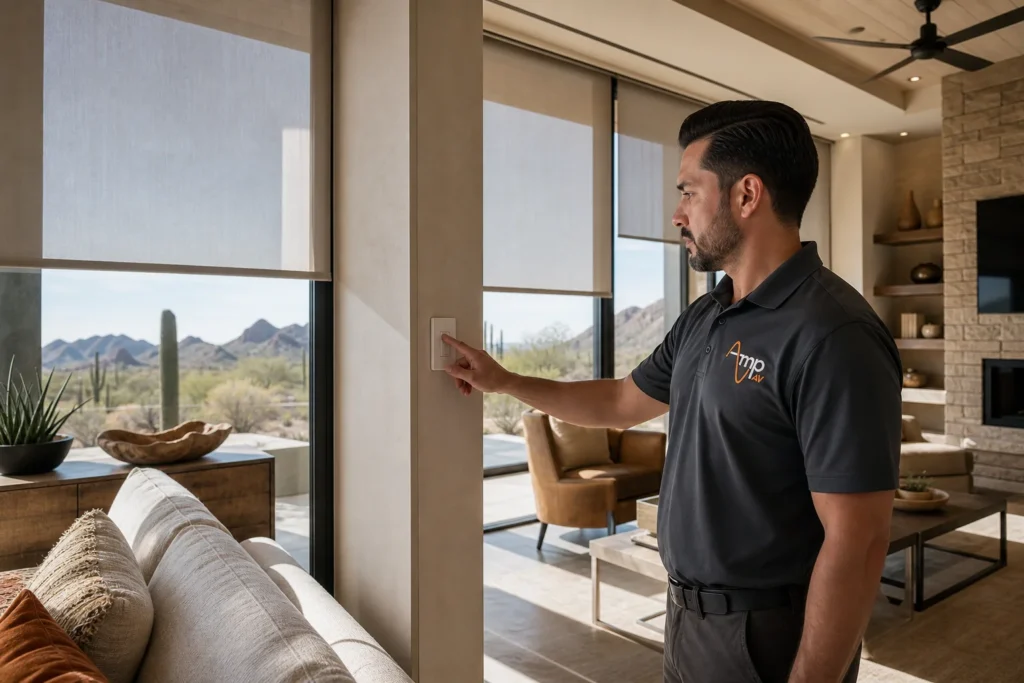
Motorized window shades give Arizona homeowners precise control over natural light, heat gain, and privacy without leaving the couch. Connected to a Home Control system, these automated window treatments can cut cooling costs and sharpen the look of any room, all managed from a remote control, smartphone app, or voice command.
By Amp AV Team, AV Installation Experts
How Motorized Window Shades Work
Motorized window treatments replace the manual cords and pull rods on traditional blinds shades and roller shades with quiet electric motors built into the headrail. A controller in that motor drives the fabric or slat assembly up, down, or to any intermediate position with a press of a button. Most systems accept commands from a dedicated remote control, a low-voltage wall keypad, a smartphone app, or a compatible voice assistant.
Motor configurations fall into two main categories: hardwired and battery-powered. Hardwired motors draw power directly from your home's electrical system, making them the most reliable choice for permanent installations. Battery-powered motors, available in both disposable and rechargeable formats, work well in retrofit situations where cutting into walls is not practical.
Types of Motorized Window Treatments for Arizona Homes
The selection of blinds shades available today is broader than most homeowners expect. Choosing the right product type for each window makes a meaningful difference in both performance and appearance.
Roller shades roll a single fabric panel onto a tube at the top of the window frame. Motorized roller shades come in light-filtering or blackout weights, making them a popular choice for bedrooms, media rooms, and south-facing windows that take the full force of afternoon sun.
Cellular shades use honeycomb construction to trap air pockets between the glass and the room. Motorized cellular shades add measurable insulation to any window, an advantage that compounds during Arizona's long cooling season.
Motorized blinds (horizontal and vertical slat designs) use a tilt motor to rotate the slats to any angle, giving you precise control over incoming light without raising or lowering the entire assembly. Smart blinds extend this further by connecting tilt and lift functions to your smart home platform, so you can adjust every window in the house from a single interface.
Solar shades filter UV and visible light based on their openness factor. A 3% openness solar shade cuts glare aggressively while preserving the view, making them well suited to living rooms with large picture windows facing west.
Our Services at Amp AV cover all of these product types, from motor specification through programming and full installation.
Energy Savings in Arizona's Climate
Arizona's cooling season runs most of the year, and windows are one of the primary paths for heat to enter a home. Motorized shades can close automatically before direct sun hits the glass each morning, reducing the heat load your air conditioning system has to manage throughout the day.
Research published in Energy and Buildings (Ihm, Krarti, and Henze, 2009) found that interior window shading devices reduced peak cooling loads by up to 20% in hot-climate building simulations when used consistently. The automation in motorized window shades makes that consistency realistic for a busy household. A schedule programmed once into your control system closes the motorized shades on every south and west exposure at 9 a.m. and reopens them at 6 p.m., every day, without anyone needing to remember.
Motorized cellular shades contribute a second layer of benefit. Their honeycomb construction slows conductive heat transfer through the glass assembly, which matters most during late evenings when outdoor temperatures remain high after the sun has set.
Motorized window treatments work best as one piece of a broader smart home technology integration plan, tied into the same platform that runs your lighting, audio, and climate control.
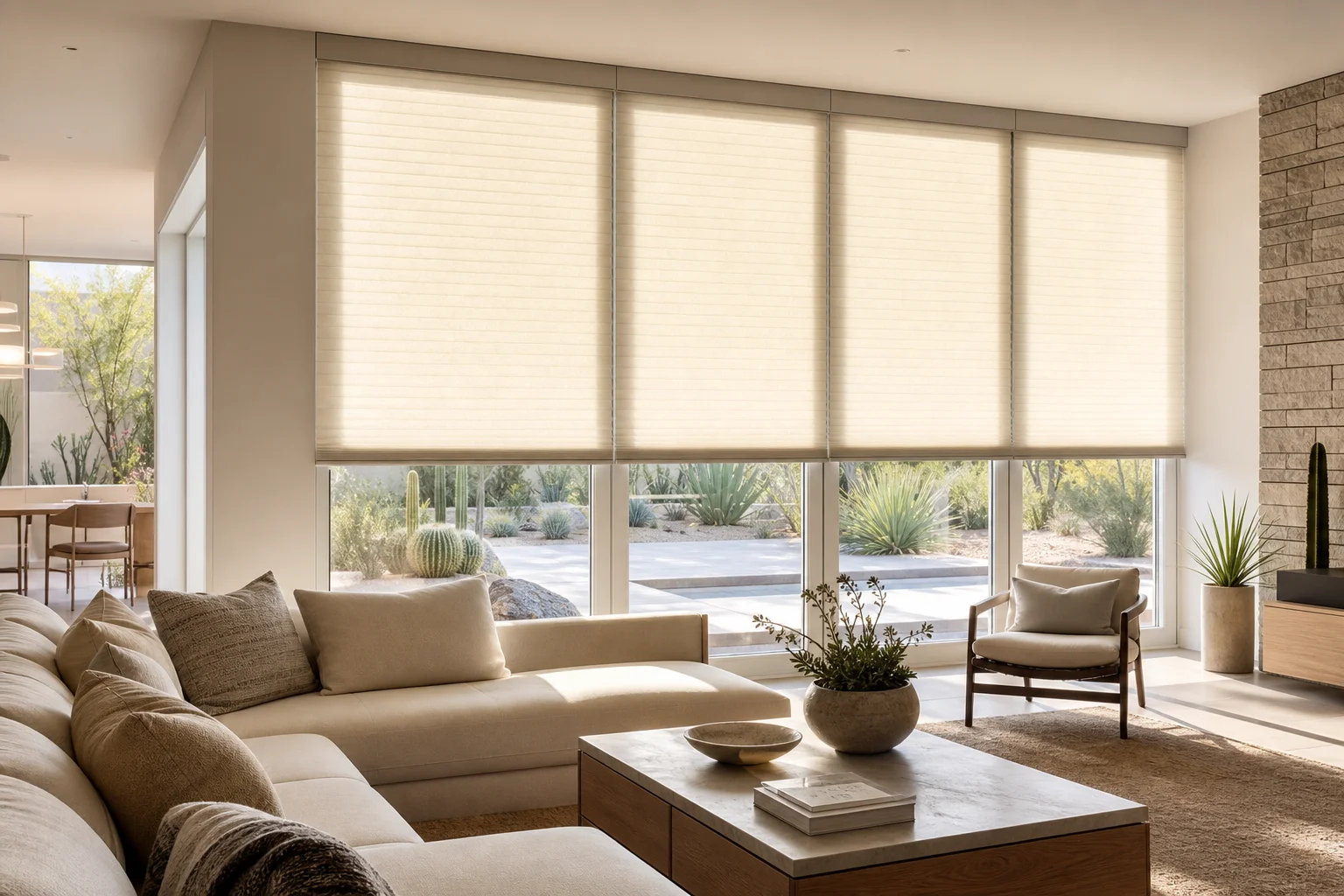
Smart Home Integration for Motorized Window Shades
Motorized window shades connect naturally to a smart home ecosystem. When your window shades link to a whole-home automation platform, they respond to sensors, schedules, and conditions across the house, not just button presses.
Scene-Based Control
A single command can lower the motorized blinds in the media room, dim the lights, and power on the projector at the same time. A morning scene can raise every window shade in the house at a set time before the sun angle becomes a problem for your cooling system.
Sensor-Driven Automation
A solar sensor can trigger your motorized window treatments to close when direct sun reaches a specific window, even when no one is home. Thermostat integrations can factor window shade position into cooling decisions during peak afternoon heat.
Voice and App Control
Compatible smart home platforms, including Control4, Lutron, Savant, and similar systems, allow motorized blinds and smart blinds to be adjusted by voice or from a smartphone anywhere you have an internet connection. Pairing motorized shades with automated lighting control creates a complete approach to daylight management across every room, with both systems responding to the same schedules and sensors.
Style, Design, and Fabric Selection
Motorized window shades are available in a range of fabrics, finishes, and configurations wide enough to suit any interior design direction, from contemporary minimalist to the Southwest-influenced aesthetics common across Arizona.
Fabric choice drives most of the design decision. Light-filtering fabrics in neutral tones add texture without visual weight. Blackout fabrics in deep colors anchor a room and are necessary in dedicated media spaces. Dual-roller configurations mount two separate fabric panels on a single headrail, allowing you to switch between a sheer daytime layer and a blackout panel without changing any hardware.
For homes with large sliding glass doors or floor-to-ceiling windows, motorized roller shades handle oversized openings more cleanly than manual systems because there is no cord tension to manage at those spans.
The motorized window hardware itself, including headrail and fascia covers, comes in powder-coated aluminum in many colors, creating a clean and integrated appearance against painted walls, natural wood, or stone surfaces.
Layering motorized shades with whole-home audio creates a cohesive living environment that responds to how you actually use each space. A single scene can lower the shades, dim the lights, and start the audio together, so the whole room shifts into a different mode with one command.
Frequently Asked Questions
Do motorized window shades require professional installation?
Battery-powered motorized shades can be installed by a capable DIYer in straightforward window openings. Hardwired systems and any shade that must integrate with a smart home platform or a low-voltage control system benefit significantly from professional installation to ensure correct motor sizing, accurate programming, and reliable long-term operation.
How long do batteries last in motorized blinds?
Battery life varies by motor brand, shade weight, and how often you operate them. Most manufacturers rate their battery packs at one to three years of typical use. Rechargeable lithium-ion packs, available from several manufacturers, can be topped off in place with a USB-C cable, which simplifies maintenance for high or hard-to-reach windows.
Can smart blinds work with my existing smart home system?
Most professional-grade motorized window systems support integration with Control4, Crestron, Savant, Lutron RadioRA, and Amazon Alexa. A licensed integrator can confirm compatibility with your specific setup and recommend the right bridge device or communication protocol before any hardware is purchased, ensuring reliable performance from the start.
What is the difference between motorized blinds and smart blinds?
Motorized blinds refers to any blind with an electric lift or tilt motor, including basic models that operate only from a dedicated remote control. Smart blinds add wireless connectivity to a control platform, enabling scheduling, sensor triggers, and integration with other home systems through a single app or interface.
Are motorized shades a worthwhile investment for an Arizona home?
For homes with significant south or west window exposure, the combination of reduced cooling loads, consistent automated scheduling, and daily convenience makes motorized shades a strong investment. A properly programmed system manages window shade positions every day without any manual input, and the energy savings compound over time.
Schedule Your Motorized Shade Installation in Phoenix
Amp AV designs and installs motorized window shades throughout the Phoenix metro area, from single-room projects to complete smart home automation builds. Contact Us to discuss your window configurations, control preferences, and the right products for your home.