
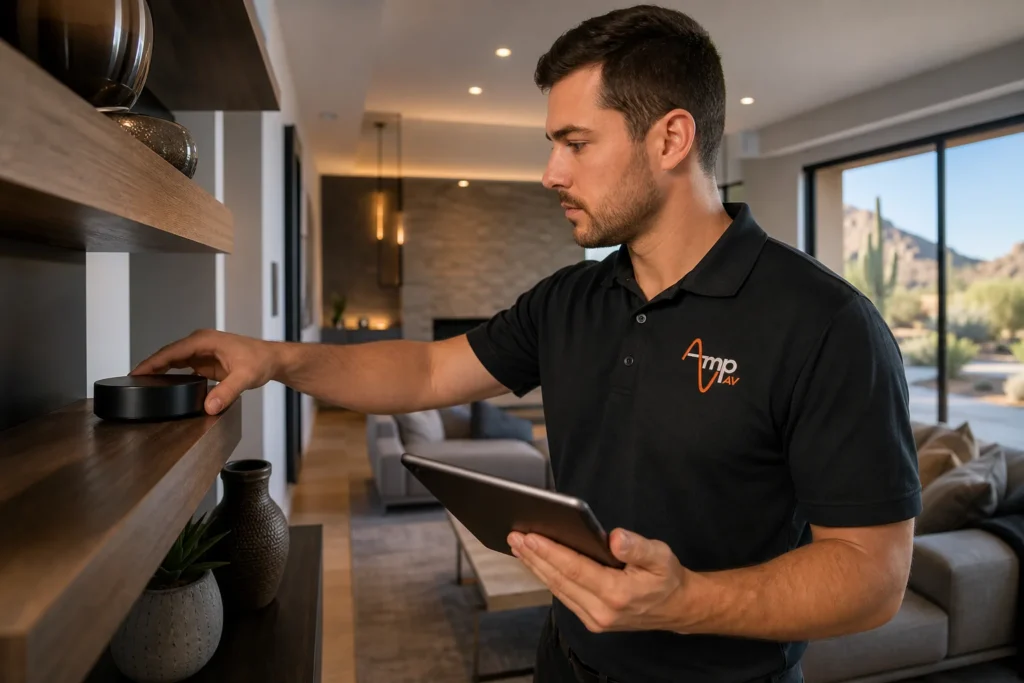
Voice control installation in Phoenix turns scattered smart devices into one system you run with a sentence. Amp AV integrates Amazon Alexa, Google Home, and Siri with your Home Control setup so you can control the home's lights, locks, thermostats, and entertainment with simple voice commands from any room.
By Amp AV Team, AV Installation Experts
What a Voice Control Installation in Phoenix Includes
A professional voice control installation in Phoenix starts with a walkthrough of your home to map out which rooms need coverage and which smart home devices you already own. From there, Amp AV technicians install smart speakers or hub devices, connect them to Amazon Alexa, Google Home, or Siri accounts, and pair them with your lighting, thermostat, locks, and audio video gear so every device answers to one control system. We also configure custom voice commands and routines, movie night dims the lights and drops the screen, good morning opens the shades, so the system learns how your household lives. Before we leave, we test each command in every room, confirm activation on your phone's app, and walk through basic troubleshooting.
How Long Does the Installation Take?
Most residential voice control projects take between half a day and a full day, depending on how many rooms and devices are involved. A single-room setup can usually be finished in a few hours, while a whole-home project spanning multiple rooms may take a full day to configure and test.
What's the Difference Between Alexa, Google Home, and Siri for Home Automation
Home automation in Phoenix often starts with which phones and services your household already uses, since the three assistants integrate with whole-home systems differently. Amazon Alexa has the widest device support of any voice assistant on the market, so it tends to work well in homes with a mix of brands. Google Home is strong at understanding natural, conversational commands and fits well if your household is already invested in Google services and Android phones. Siri, through Apple HomeKit, integrates tightly with iPhones and emphasizes privacy and local processing, though it supports fewer third-party device brands than Alexa or Google Home. None of the three is universally best, the right choice comes down to which phones your household uses and which devices you want the system to manage. Many Phoenix homes end up running more than one assistant side by side.
Which Smart Home Devices Are Compatible with Alexa, Google Home, and Siri
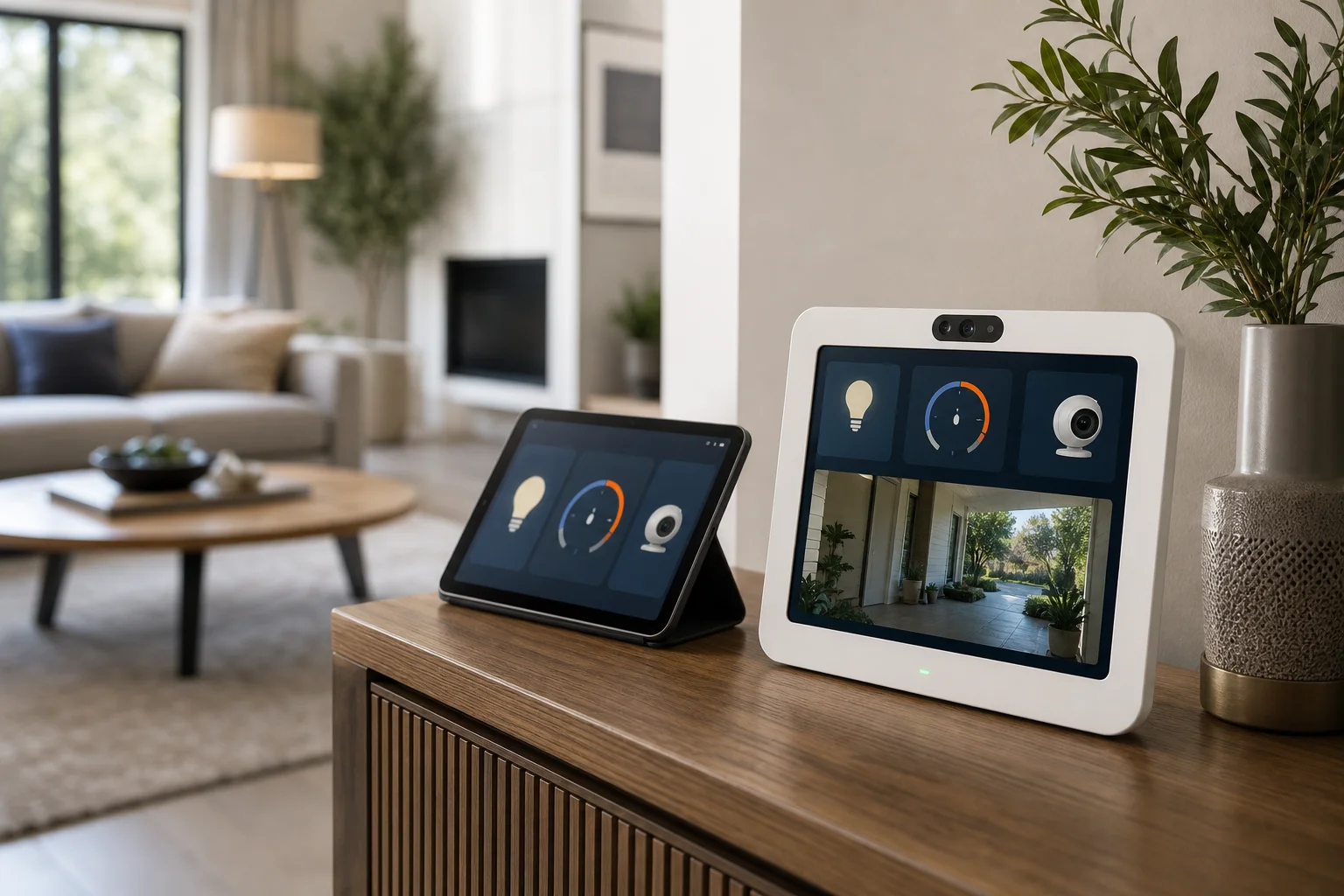
Most current smart home devices work with at least one major voice assistant, and many support all three. Smart lighting control is one of the most common starting points, letting you dim, brighten, or turn off every fixture with a single voice command. Thermostats, smart locks, garage door openers, and Security Cameras can typically be integrated into the same control system. Motorized shades, smart plugs, and multi-room speakers round out the most requested categories. The exceptions tend to be older or budget devices never built with a smart home hub in mind. Before installation, Amp AV checks your existing devices against each platform's supported brand list so we know what will integrate cleanly.
How Much Does Voice Control Installation Cost in Phoenix
Pricing depends on the number of rooms, the number of devices being integrated, and whether you're adding new hardware like smart locks or motorized shades or simply connecting devices you already own. A single-room setup with a hub and a handful of existing devices generally costs less than a whole-home project that ties together lighting, security, audio, and climate control into one system. Because every home's device list and wiring situation is different, Amp AV avoids quoting a flat number before seeing the space. The most accurate way to get a price is a walkthrough or virtual consultation, where we look at what you own, what needs to be added, and build a quote around your home instead of a generic package.
Should You Hire a Professional Installer or Set Up Voice Control Yourself
A basic voice assistant, one smart speaker paired with a couple of smart plugs, is simple enough to set up yourself in an afternoon using the manufacturer's app. Where DIY setups tend to run into trouble is scale: getting Alexa, Google Home, or Siri to reliably manage a house full of device brands, keep routines from conflicting, and stay connected across a large floor plan usually takes more networking know-how than most homeowners have on hand. A professional installer also handles the parts that are easy to miss: hiding wiring, positioning hubs for coverage, setting up guest access, and keeping the system working after a router reset. If you're connecting one or two devices, DIY is a reasonable place to start. If you're building a full smart home, professional installation saves the trial and error.
How Does Arizona's Extreme Heat Affect Smart Home Voice Control Devices
Phoenix summers regularly push attic and outdoor temperatures well past what most consumer electronics are rated for. Outdoor speakers, exterior cameras, and any hub in a garage or attic are the most exposed, since sustained heat can shorten a device's lifespan and cause signal dropouts. A reliable network infrastructure backbone matters more in Arizona than in milder climates. Placing routers, mesh points, and hubs indoors, choosing outdoor-rated hardware for anything mounted outside, and giving devices airflow to avoid trapped heat keeps voice control systems responsive through the hottest months. Amp AV factors Arizona's climate into every device placement decision.
Frequently Asked Questions
Can Alexa, Google Home, and Siri all be used in the same house?
Yes. Many Phoenix homes run more than one voice assistant, using Alexa or Google Home for whole-house routines and Siri for iPhone-based control of HomeKit devices. The main thing to plan for is deciding which assistant owns each device, since a smart lock or thermostat usually pairs to one app at a time.
Does voice control work with my existing smart home devices and brands?
In most cases, yes, especially if your devices are less than a few years old and support Wi-Fi or a common protocol like Zigbee or Z-Wave. Amp AV checks your existing brands against each platform's supported device lists during the walkthrough so we know what integrates directly and what needs a bridge.
Is professional installation worth it compared to DIY voice control setup?
For a single speaker and a couple of smart plugs, DIY is usually fine. For a full smart home with multiple device categories, a professional installer typically pays for itself in avoided troubleshooting, since a properly configured system causes far fewer dropped commands than a self-installed one that was never tuned to the home.
Do voice assistants still work during a power or internet outage in Phoenix?
Voice assistants generally need both power and an internet connection to process commands, so a full outage takes them offline along with the rest of your connected devices. Battery backups for routers and hubs can keep a system running through short outages, and Amp AV can build backup power into the network setup for homes that want that extra layer of reliability.
Get Voice Control Installation in Phoenix from Amp AV
If you're ready to turn your lights, locks, thermostat, and entertainment system into one voice-controlled system, our team can build a setup around the devices you already own. Contact Us to schedule a walkthrough and get a plan for your home.