
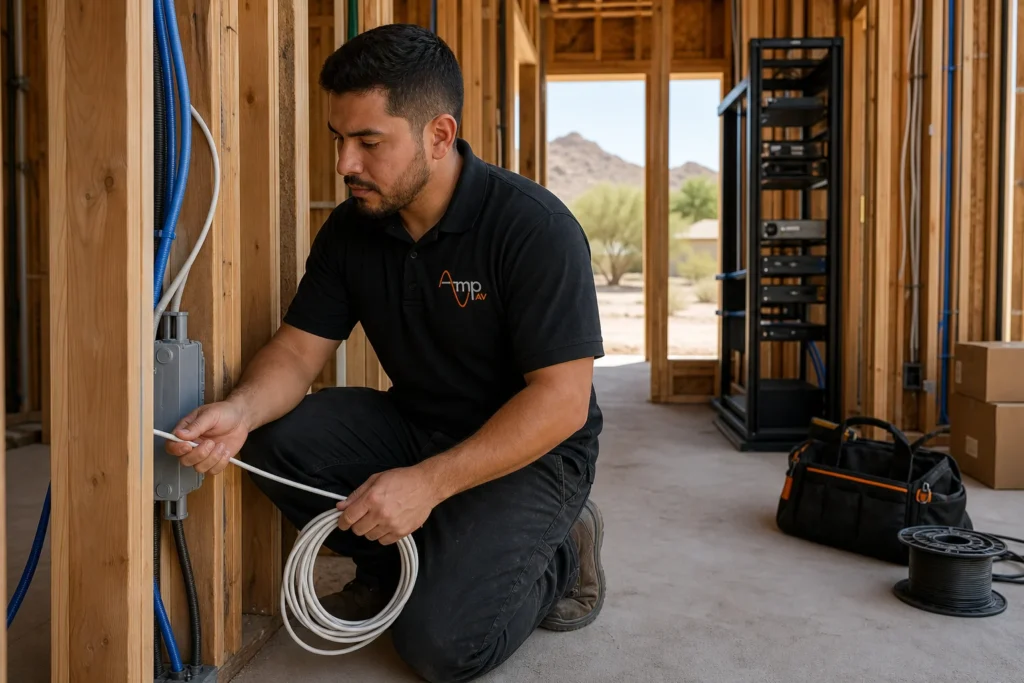
Planning a new construction prewire in Phoenix build? The right time to run low-voltage cabling is before drywall goes up, not after. Pre-wiring during framing gives your home theater, whole-home audio, and Home Control systems a clean foundation, saving Arizona builders and buyers thousands in retrofit costs.
By Amp AV Team, AV Installation Experts
What Is New Construction Prewire in Phoenix and Why Does It Matter?
New construction prewire is the process of running low-voltage cable, the wiring that carries data, audio, and video signals rather than household power, through wall cavities and ceilings before drywall closes them in. For a new home build, this includes conduit and cable runs for home theater speakers, whole-home audio, network access points, and security cameras. Doing this work during construction means every wire terminates behind a wall plate instead of running along baseboards after the fact. For Arizona home builders and buyers, it's the difference between a finished, professional installation and a visible patchwork of retrofit cabling.
When Should You Pre-Wire a New Home During the Build Process?
Pre-wiring for new home construction typically happens during the rough-in phase, after framing, plumbing, and electrical rough-in are complete but before insulation and drywall go up. This window usually opens a few weeks after the foundation is poured and closes once drywall crews are scheduled. Waiting until the walls are finished means every cable run has to be fished through existing insulation or surface-mounted, which usually costs more and looks less clean. Builders who plan for structured wiring early can coordinate the low-voltage rough-in alongside the standard electrical rough-in, keeping the schedule on track without extra callbacks.
What Technology Should Be Pre-Wired in a New Construction Home?
A solid prewire plan for new construction usually covers several systems at once. Home theater rooms need speaker wire and HDMI runs to the equipment rack, sized for the screen and seating layout. Whole-home audio benefits from in-ceiling speaker wire routed to multiple rooms, which pairs well with Multi-Room Audio Video systems once construction wraps up. Security camera locations need low-voltage runs to the garage, entry points, and backyard, so homeowners can view live footage without battery-powered cameras. A home network backbone with wired access point drops keeps Wi-Fi strong throughout the home, and running outdoor patio wiring during the build avoids exposed cable in the backyard later. Many buyers also prewire for smart thermostats and lighting control.
How Much Does New Construction Pre-Wiring Cost in Phoenix, Arizona?
Pricing for new construction prewire in Phoenix depends on square footage, the number of rooms getting coverage, and how many systems are included, home theater, whole-home audio, security, and networking each add their own cable runs. Builders and buyers usually get the clearest answer by requesting a walk-through of the floor plan before framing starts, for a more accurate quote than a flat per-square-foot estimate. Prewiring during construction is also generally more cost-effective than retrofitting after move-in.
Should Arizona Builders Use the Electrician or a Low-Voltage Specialist for Pre-Wiring?
The line-voltage electrician on a new build handles power circuits, outlets, and lighting, work governed by the National Electrical Code. Low-voltage prewiring for audio, video, network, and security systems is a separate trade with its own cable types and standards, so most Arizona home builders bring in a dedicated AV or low-voltage specialist to run this scope alongside the electrician. Coordinating both trades during the same rough-in window keeps the schedule tight and avoids wall cavities closing before the low-voltage runs are finished.
What Happens If You Skip Pre-Wiring and Add Smart Home Technology Later?
Skipping prewiring is not the end of the road, but it usually means more work later. Adding a home theater, whole-home audio, or a full Home Control setup after move-in often requires fishing cable through finished walls, drilling access holes, and patching drywall. Some retrofits use wireless alternatives or surface-mounted raceway instead, which can limit performance compared with wiring installed during construction.
What Is Structured Wiring and How Is It Different From Standard Electrical Wiring?
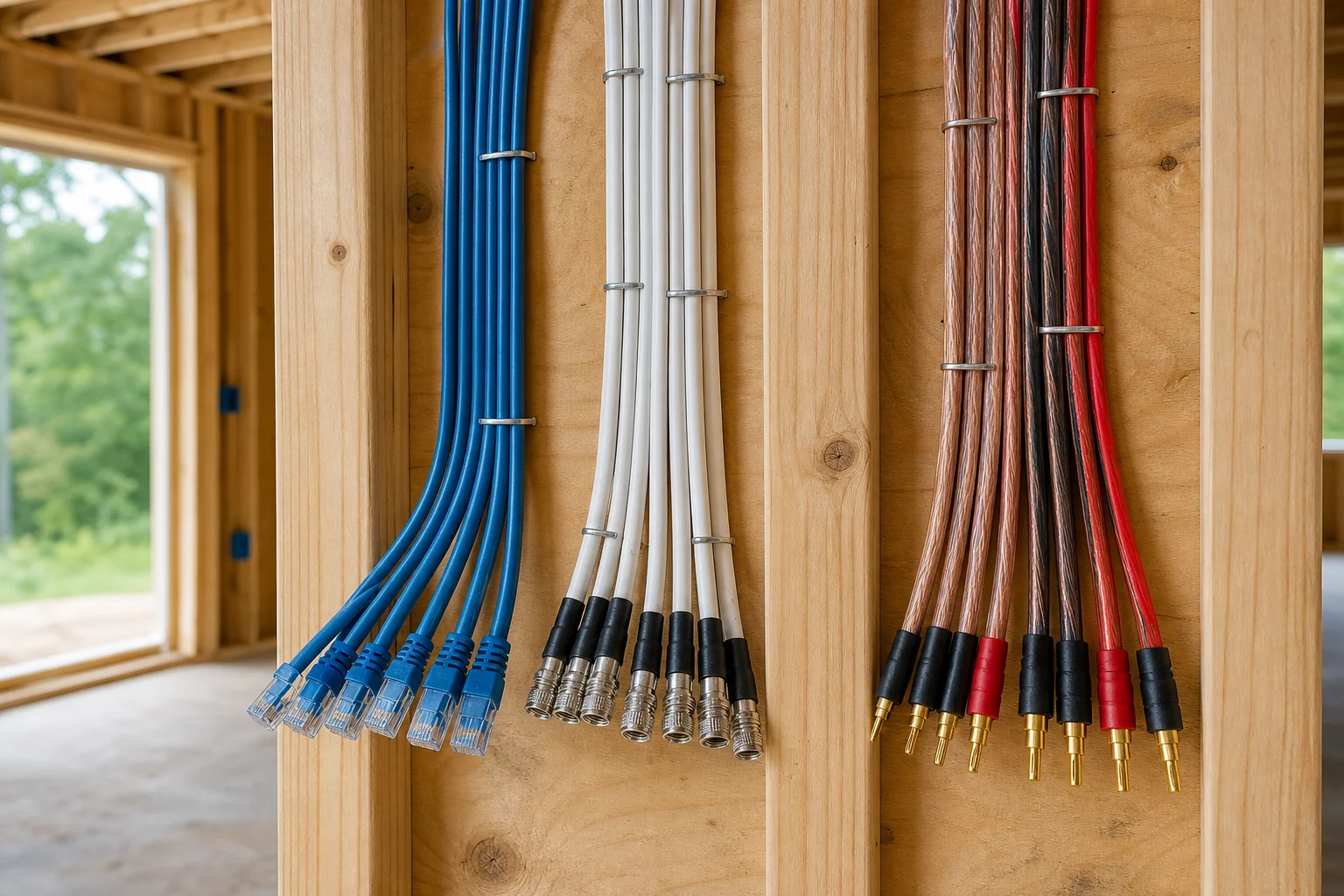
Structured wiring is the organized system of low-voltage cable, coaxial, Ethernet, and speaker wire, that carries data, audio, and video signals back to a central distribution panel, usually located in a closet or utility room. Standard electrical wiring carries household power at 120 or 240 volts to outlets, switches, and fixtures, and follows a different code entirely. Because the two systems carry different signal types, they use different cable and boxes, and are typically kept a minimum distance apart in the wall cavity to avoid interference.
Can You Add Pre-Wiring After Drywall Is Already Installed?
Yes, though the options narrow once drywall is up. A low-voltage specialist can often fish cable through open wall cavities near attic or crawl space access, or reuse chases used by other wiring. Where fishing isn't possible, surface-mounted raceway or wireless equipment can fill the gap. This approach usually costs more per room than prewiring during construction and may involve a few patched spots, so it's worth a quick walk-through with a specialist first.
How Far in Advance Should You Schedule Pre-Wiring With Your Phoenix Builder?
Ideally, prewiring gets scheduled as soon as the technology plan is decided, often during the design or permitting stage, well before the first rough-in inspection. Builders coordinating a custom home usually loop in a low-voltage specialist alongside the electrician and plumber during the same planning meetings. Across new home communities in the Phoenix area, more developers are building structured wiring into their standard specs, so buyers should ask early whether prewiring is included or available as an upgrade before signing a build contract.
Do You Still Need Pre-Wiring If You Plan to Use Wireless Smart Home Devices?
Wireless devices still generally perform better with a wired backbone behind them. A wired network drop to each access point keeps a mesh Wi-Fi system fast and consistent, rather than relying on wireless devices to relay signal between rooms. Security cameras and video doorbells often need continuous power that a hardwired run provides more reliably than batteries, and a Home Control hub usually works best on a wired connection rather than competing for Wi-Fi bandwidth with everything else in the home. Prewiring gives a wireless-first lifestyle a stronger foundation, even when most visible devices end up being wireless.
Frequently Asked Questions
Is pre-wiring required for new home construction in Phoenix?
Pre-wiring isn't required by code, but it's increasingly common in new home communities across the Phoenix area, especially in builds that offer smart home packages. Most builders and buyers find it's easier to include structured wiring during construction than to add it after move-in.
Does pre-wiring increase home value?
Structured wiring is generally viewed as a desirable feature by buyers who want a home theater, whole-home audio, or a Home Control system without visible cable or patched walls. The exact value impact varies by market, but a professionally pre-wired home typically shows better during a walkthrough and needs less retrofit work for the next owner.
How long does pre-wiring take during a new construction build?
Most low-voltage prewiring for a single-family home takes one to three days on-site, depending on square footage and the number of systems included. It's usually scheduled in the same rough-in window as electrical and plumbing, so it typically doesn't add time to the build schedule when planned in advance.
Can pre-wiring be added to a production home, not just a custom build?
Yes. Many production home builders in Arizona now offer structured wiring as a builder option during design center selections. If it isn't offered as standard, buyers can usually still request it before the electrical rough-in, though the window closes once framing and rough-in inspections are complete.
Plan Your New Construction Prewire With Amp AV
Whether you're building a custom home or buying in a new community, Amp AV can build a prewiring plan around your floor plan and technology goals before the walls close. Contact Us to learn how a prewiring plan fits your Phoenix builder's timeline.