
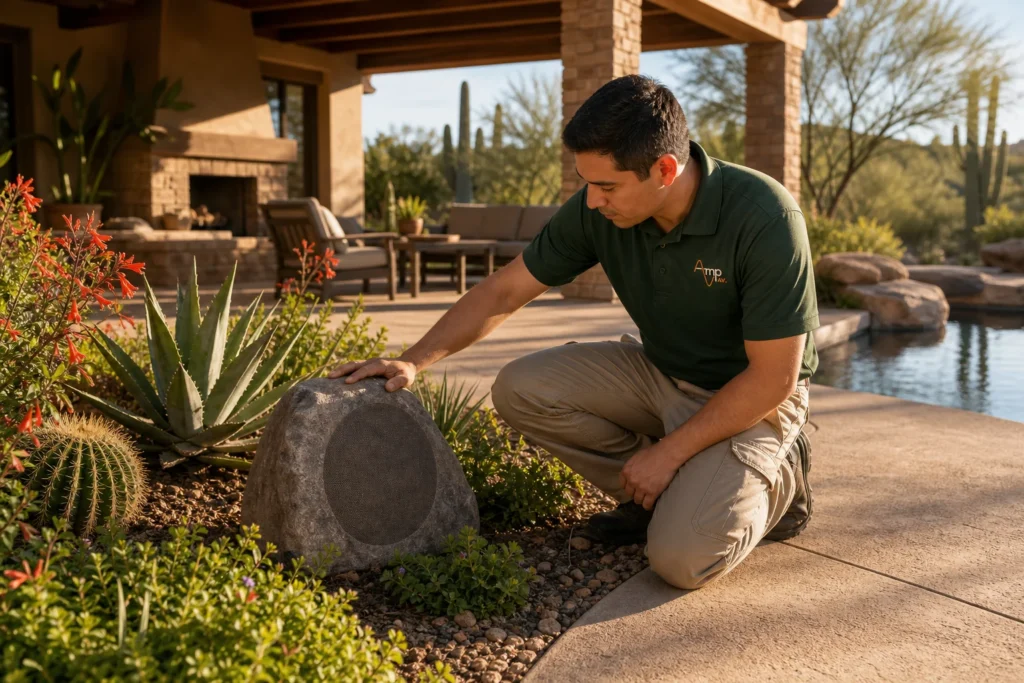
Zoning outdoor audio means giving your patio, landscape or pool separate speakers, volume, and sources inside one Outdoor Entertainment system, so pool music doesn't drown out patio conversation and landscape speakers stay soft in the background. Most East Valley backyards need at least three zones to pull this off cleanly.
By Amp AV Team, AV Installation Experts
Zoning Your Patio, Landscape, or Pool: What It Actually Means
Zoning outdoor audio just means running your backyard on more than one channel. Instead of a single speaker pair blasting the same volume and song across the whole yard, a zoned setup splits the patio, landscape or pool into independent listening areas. Each zone gets its own speakers, its own volume level, and often its own source, so the ramada can run a game broadcast while landscape speakers along the walkway stay low enough for conversation. A basic Amp AV zoning plan starts with three questions: where do people actually gather, where do they only pass through, and which areas need to stay quiet on their own. Outdoor audio zoning fits how East Valley families already use their outdoor living space through most of the year, solving the two most common backyard complaints at once: one area too loud, and another you can barely hear.
How Many Zones Does an East Valley Backyard Actually Need
Across Amp AV's East Valley service area, most yards land on three to five zones once you map out how the space actually gets used. A typical layout separates the covered patio, the pool and spa deck, and the landscape beds or side yards into their own channels, then adds a fourth zone for a dedicated dining or lounge area if the lot is large enough. For a Scottsdale pool, patio, and landscape system, that usually means one amplifier channel for each physical area rather than one giant zone trying to do everything. The same zoning logic that drives a whole home Multi-Room Audio Video install indoors carries outside: more, smaller zones give homeowners more control, but each zone adds a small amount of equipment and wiring, so we size the count to how the yard is actually used, not to what looks impressive on paper.
Speaker Types for Covered Patios and Ramadas
A covered patio or ramada is the easiest zone to get right because the roofline already protects the equipment from direct sun and most rain. In-ceiling and in-wall speakers are the most common choice here, since the covered structure gives installers a place to run wire and mount a grille flush with the ceiling. Look for a moisture-resistant or outdoor-rated in-ceiling speaker even under cover, because monsoon humidity and blowing dust reach covered patios too. For patios without a solid ceiling, weatherproof surface-mount speakers on the fascia or posts do the same job without needing to open up drywall. This zone usually carries the most demanding sound, TV audio, background music, and conversation, so it gets priority when we're deciding where the amplifier headroom goes.
Pool-Rated Speakers: What Makes Them Different
Speakers near a pool or spa need a higher weatherproof rating than a covered patio requires, because they take direct sun, splashing, and pool chemicals instead of just humidity. Amp AV specs marine-grade or UV-stabilized speakers for this zone, drawing on years of experience installing near Arizona pools, with corrosion-resistant hardware and sealed drivers that won't warp or crack after a few desert summers. Mounting height and angle matter as much as the speaker itself: pool zone speakers usually sit higher and angle down toward the deck, both to clear splash range and to spread sound evenly across the water instead of blasting whoever is closest. Because this zone tends to run during pool parties and daytime swimming, it also gets its own volume control, separate from the patio, so a pool speaker level that feels right for swimmers doesn't overwhelm a quieter conversation area a few feet away.
Placing Speakers Through Landscaping Without Wrecking the Yard
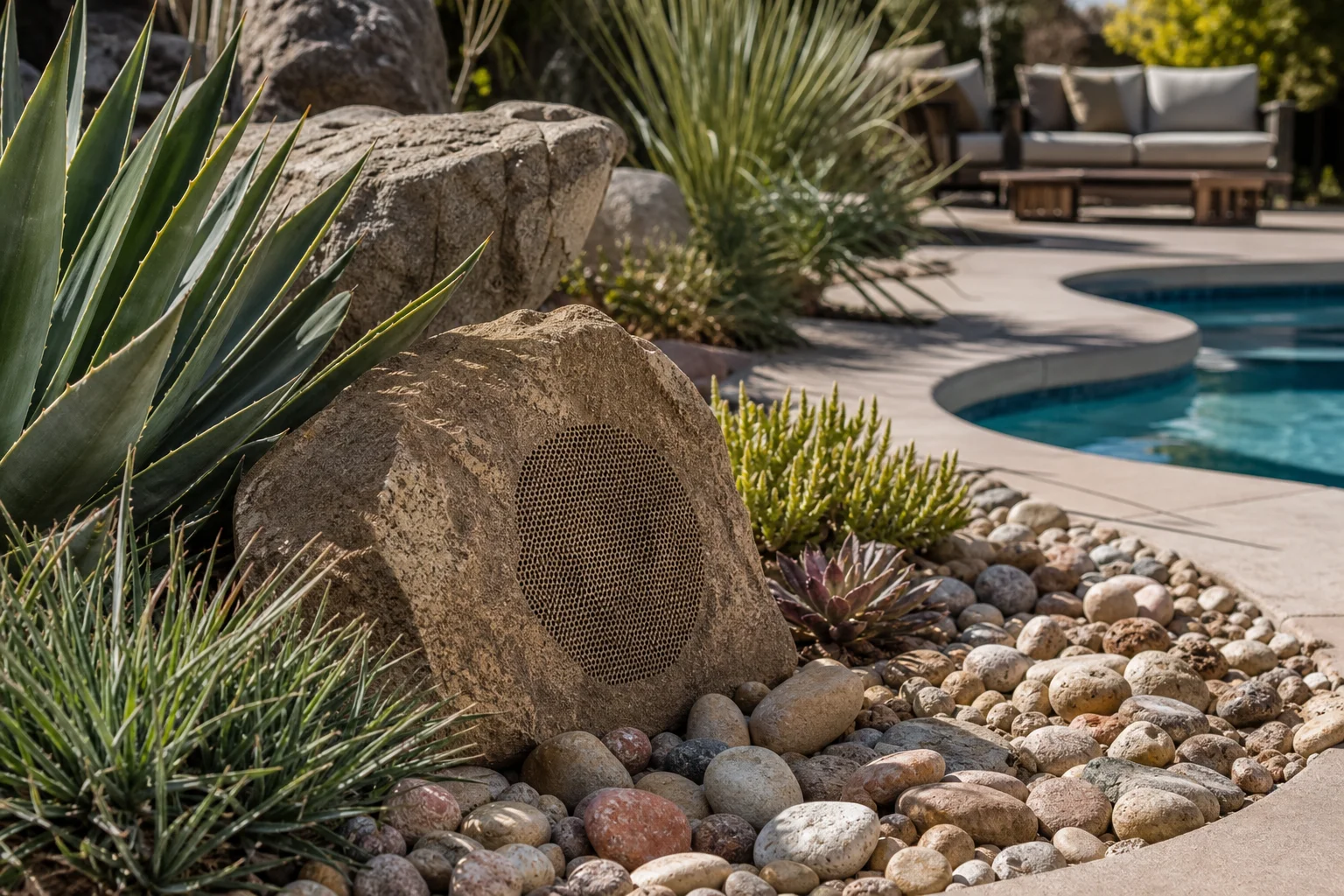
Landscape zones are where speaker placement gets the most creative, because the goal is sound without a visible speaker. Rock speakers, shaped and textured to match river rock or boulders already in the yard, are the most common solution for pool landscaping and garden beds, they sit directly in the planting bed and disappear next to real stone. In-ground subwoofers work the same way for low end, mounted flush with the grass or decomposed granite so there's nothing to trip over or mow around. The best results come from treating speaker placement as part of the landscape design itself rather than an afterthought: we walk the yard with the landscaper or homeowner before anything is planted or poured, so wire runs follow planting beds alongside landscape lighting, and conduit goes in under pavers before hardscape is finished, not after.
In-Ground, Rock, and Landscape Speakers Compared
In-ground speakers fire straight up through a grille flush with the ground, best for open lawn or turf areas where nothing can be mounted at height. Rock speakers sit on top of the soil or mulch and throw sound outward like a normal outdoor speaker, better where the ground isn't level or a raised bed already has real boulders to match. Landscape speakers is the broader category that also includes small spike or stake speakers tucked behind shrubs, useful for shorter plantings where even a rock enclosure would stick out. Which one fits a given bed usually comes down to what's already growing there and how close the zone sits to a walking path.
This kind of coordination matters most when landscape audio is part of a larger backyard project, complete pool decks, new turf, and a fresh irrigation system are exactly when a full outdoor entertainment build makes sense, because conduit and low voltage wire go in once, during construction, instead of getting trenched in later.
Controlling Volume and Music Separately Across Zones
Independent control is what makes zoning worth doing in the first place. Each zone, patio, pool, and landscape, gets its own volume level and can play a different source at the same time, a game on the patio TV, a playlist by the pool, and the landscape zone turned down low or off entirely. Wall-mounted keypads at each zone give a quick physical volume control for guests who don't want to open an app, while a central multi-zone amplifier or matrix keeps every zone's source and level independent of the others. This is the same architecture behind a well-planned multi-room audio design, just extended past the back door: the indoor system and the outdoor zones can share sources and even hand off the same song from the kitchen to the patio as guests move outside, without anyone touching a different app or remote.
Frequently Asked Questions
How much does a zoned outdoor audio system cost in the East Valley?
Cost depends on how many zones you want, what each zone needs, and how much wiring or landscaping work is involved in reaching them. A patio-only zone is usually the least expensive starting point, while adding pool-rated and landscape zones raises the total based on speaker count and installation complexity. Amp AV walks each yard in person before quoting, since terrain and existing landscaping change labor more than the equipment does.
Can pool and landscape zones be added to an existing patio speaker system later?
Usually, yes, as long as the existing amplifier or matrix has open zone capacity and there's a reasonable path to run new wire. If the original patio system was installed with a single fixed zone and no spare channels, adding pool or landscape audio later may mean upgrading the amplifier alongside the new speakers rather than just adding wire.
Does each outdoor zone need its own amplifier?
Not necessarily. A single multi-zone amplifier can usually power several outdoor zones, patio, pool, and landscape, at independent volumes and even independent sources, as long as it has enough channels and wattage for the total speaker count. Very large properties or zones with heavy demands sometimes get a dedicated amplifier, but most East Valley backyards run comfortably on one properly sized multi-zone unit.
How loud should pool area speakers be compared to patio speakers?
Pool zones usually run a bit louder than patio zones by default, since splashing water and conversation over the water create more background noise to compete with, but the right level always depends on how the space gets used. Because each zone has independent volume control, the pool level can be raised for a party and brought back down without touching the patio or landscape zones at all.
Can each outdoor zone be controlled separately from a phone app?
Yes. Most zoned outdoor systems Amp AV installs pair with an app that shows each zone, patio, pool, and landscape, as its own tile with independent volume and source control. Guests or homeowners can adjust one zone from a phone without walking to a keypad, and the same app usually controls indoor zones too, so the whole home and yard live in one place.
Get a Custom Zoned Audio Plan for Your Backyard
Every patio, landscape or pool setup zones a little differently once you walk the yard, so the right plan starts with an in-person visit, not a guess. Contact Us to schedule a backyard audio consultation with Amp AV.