
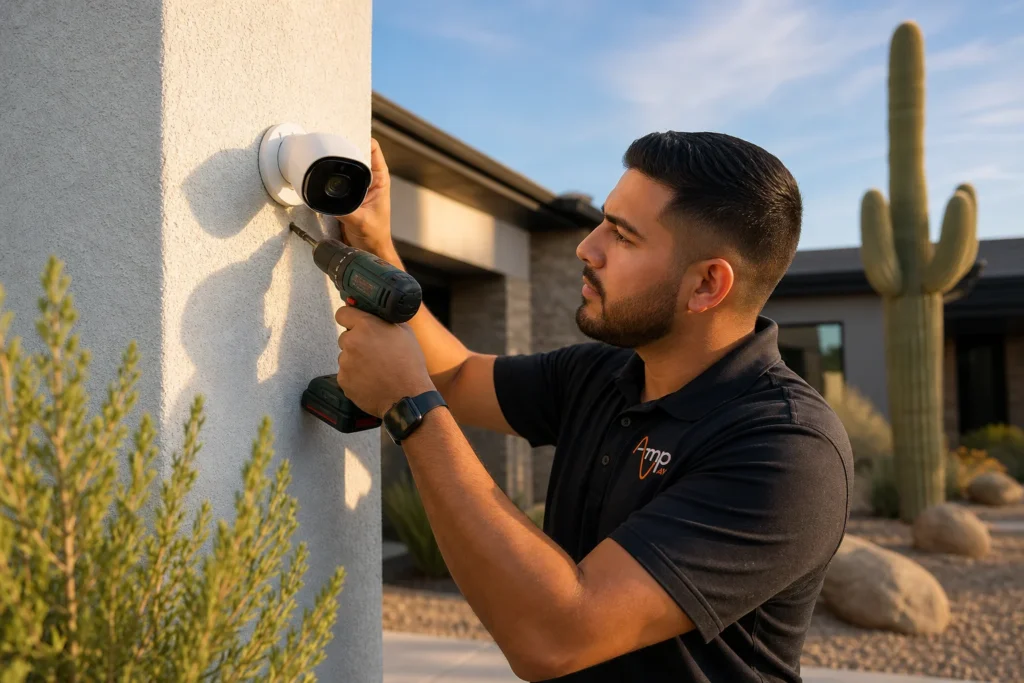
Security camera installation for Phoenix homes protects your property through every season, from monsoon storms to brutal summer heat. The right Security Cameras setup combines smart placement, proven equipment, and professional wiring to give you clear video, remote access, and genuine peace of mind whether you are home or across the country.
By Amp AV Team, AV Installation Experts
Why Phoenix Properties Benefit from a Dedicated Camera System
The Phoenix metro area records some of the highest property crime rates in the country. According to FBI Uniform Crime Reporting data, published annually by the Federal Bureau of Investigation and covering jurisdictions across Arizona, property offenses such as burglary and motor vehicle theft consistently rank among the most common incident types reported in Maricopa County. A professionally executed security camera installation does more than record incidents after the fact: it discourages criminal activity before it begins.
Phoenix's climate adds a practical engineering challenge. Summer temperatures regularly exceed 115 degrees Fahrenheit, UV exposure degrades unprotected housings, and monsoon-season dust storms leave debris on lenses and in conduit runs. A camera system built for Phoenix needs an IP66 or IP67 weatherproofing rating, a wide operating temperature range, and lenses designed to manage the glare that comes with intense desert sunlight.
Modern security cameras also stream live and recorded video to your phone, tablet, or laptop. Homeowners who travel frequently find that remote monitoring turns a passive home security investment into an active one, letting you respond to motion alerts from anywhere in the world.
Types of Security Cameras for Phoenix Homes
Not every camera serves every location. Understanding the main types helps you and your installation team make informed choices before a single wire is run.
Bullet Cameras
Bullet cameras have a long, cylindrical body that makes them immediately visible. That visibility is intentional: the physical presence of a bullet camera mounted above a driveway or entry point discourages trespassing before it starts. They typically offer longer focal lengths and features like varifocal lenses that let you adjust the field of view after mounting, making them well-suited for driveways, streets, and side yards.
Dome Cameras
Dome cameras mount flush to ceilings and eaves. Wide-angle lenses cover large open areas like garages, patios, and entry halls without creating blind spots that fixed cameras can introduce. The dome housing also makes it harder for someone to determine exactly which direction the lens points, adding a subtle deterrent layer.
PTZ Cameras
PTZ (pan-tilt-zoom) cameras let you remotely control where the lens points and how closely it zooms. For properties with large yards, pools, or commercial-size lots, a single PTZ can cover ground that would otherwise require three or four fixed cameras. They cost more upfront but reduce total camera count on larger installations.
Wired vs. Wireless Options
Wireless security cameras are easier to relocate after installation, but they depend on a stable Wi-Fi signal and a consistent power source. Hard-wired PoE (Power over Ethernet) cameras draw both data and power from a single cable, eliminating battery concerns and reducing signal interference. Most professional installations in Phoenix use wired PoE cameras for reliability, especially for cameras placed in detached garages or outbuildings where Wi-Fi coverage is weak.
Strategic Placement for Full Property Coverage
Where you install security cameras matters as much as which models you buy. Poor placement creates blind spots, duplicates angles, and wastes equipment budget.
Front entry and driveway: This is the first priority for almost every residential installation. A camera with a clear view of the front door and driveway captures faces, license plates, and package delivery records.
Side gates and fence lines: Phoenix homes typically have block walls with side gates that open directly to back yards. A camera covering each side gate closes one of the most common access points for theft and trespassing.
Back yard and pool area: Back yards hold expensive outdoor entertainment equipment, tools, and pool accessories. Cameras here also support insurance documentation after storm events.
Garage interior: An interior camera aimed at the garage door and vehicle storage area catches break-ins that exploit automatic door vulnerabilities.
Common mistakes to avoid: Placing cameras where afternoon sunlight hits the lens directly causes overexposed footage during peak activity hours. Mounting cameras too high reduces the quality of face captures. Aiming a camera toward a neighbor's yard raises privacy concerns and potential liability. A professional site walk before installation prevents all three.
How Security Camera Installation for Phoenix Homes Works
A professional security camera installation for Phoenix homes follows four main stages.
Site assessment: The installation team walks your property, identifies coverage priorities, maps existing conduit or attic access, and notes any dead zones that would affect wireless cameras. This step determines how many cameras you need and where each one will mount.
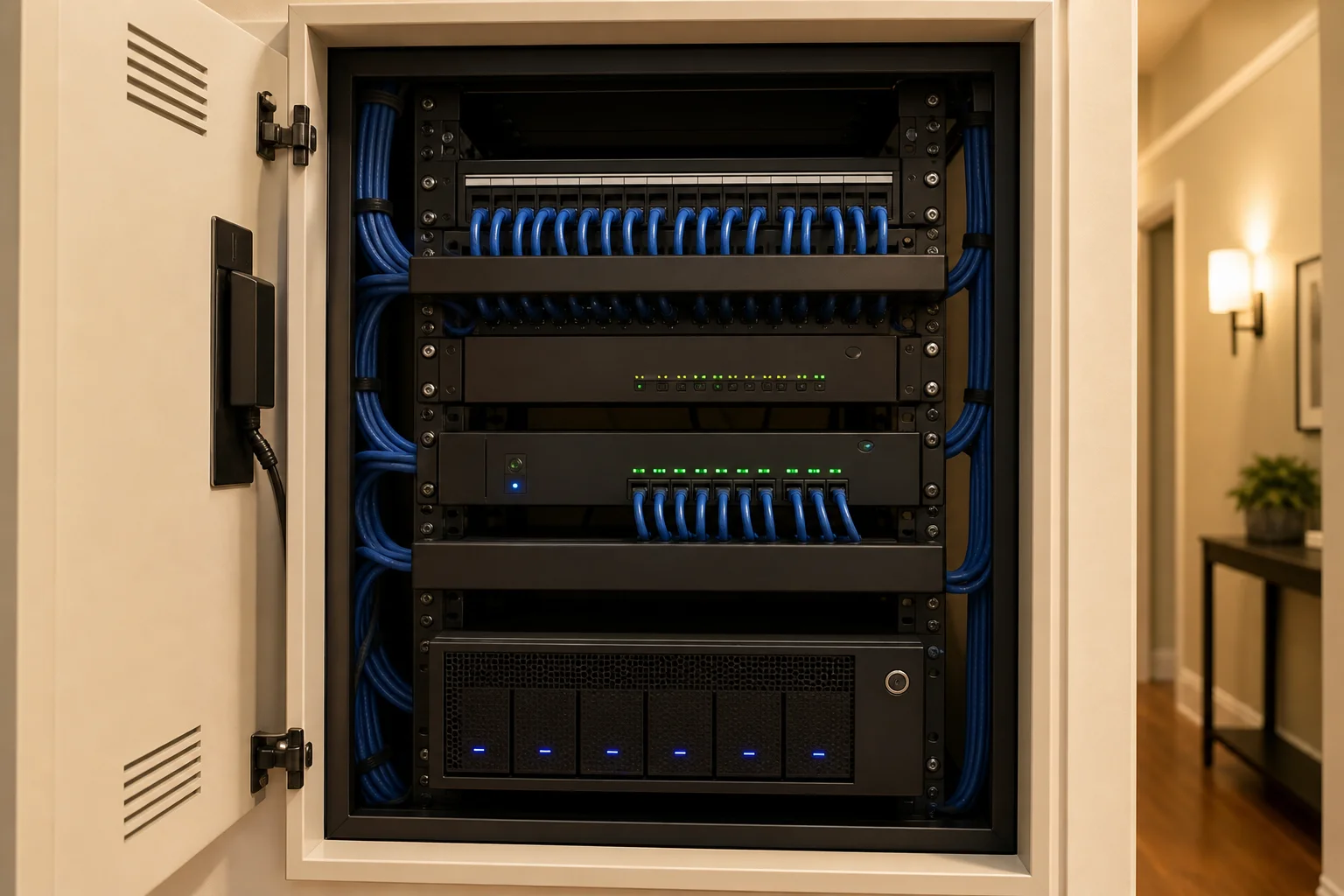
Equipment specification: Based on the site walk, the team recommends camera types, an NVR (network video recorder) for local storage, network switches, and any PoE injectors needed for the planned layout.
Cable runs and mounting: Most wired installations route Cat6 cable through attic space to keep exterior walls clean. Cameras are mounted, aimed, and weatherproofed to handle Phoenix's summer heat and monsoon conditions.
System configuration and support: The NVR is programmed with motion detection zones, recording schedules, and alert triggers. Remote monitoring access is configured on your devices before the team leaves, and our technicians provide follow-up support if you need adjustments to detection zones or recording schedules after installation.
Camera wiring does not exist in isolation. The same attic runs, cable pathways, and equipment racks that support your cameras often carry network, audio, and control wiring for the rest of the home, and treating them as one unified installation framework keeps the whole system easier to maintain and troubleshoot. Licensed low voltage technicians carry the training and accountability to run that wiring safely and correctly, which is part of what separates a professional installation from a DIY attempt over the long run.
Integrating Security Systems with Smart Home Controls
A standalone security system records and sends alerts. A smart-integrated security system lets you respond. When your camera system connects to a home control platform, you gain the ability to trigger lights when motion is detected, lock or unlock doors remotely, and view all surveillance feeds from a single app alongside your thermostat, audio, and lighting controls.
Home Control platforms like Control4 and Lutron integrate directly with major camera brands, so your security feeds appear on touchscreens already installed throughout your home. That same platform can extend well beyond security, managing lighting, climate, and entertainment through one smart home integration system alongside your cameras.
Frequently Asked Questions
How many security cameras does a typical Phoenix home need?
Most single-family homes in Phoenix are well-covered by four to eight cameras: front entry, driveway, two side gates, back yard, and optionally the garage interior. Larger properties or homes with detached casitas often benefit from ten or more. A site assessment gives you an accurate count before you commit to any equipment purchase.
Can I save money by installing security cameras myself?
DIY kits are available, but professional installation addresses cable management, weatherproofing, camera angle, and NVR configuration in ways most homeowners cannot fully replicate on a first attempt. A poorly aimed or improperly sealed camera in Phoenix's summer heat can fail within a single season. The cost difference between DIY and professional installation services is often smaller than homeowners expect once material and time costs are factored in.
Do security cameras work reliably during Phoenix monsoons?
Cameras rated IP66 or IP67 handle rain and dust well. The bigger risk during monsoon season is lightning-related power surges. A UPS (uninterruptible power supply) on the NVR and surge-protected PoE switches protect the system during storms and prevent data loss on recorded footage.
How long is footage stored on a home security system?
Most residential NVRs store 30 to 90 days of footage on internal hard drives before overwriting older recordings. The exact duration depends on camera count and resolution settings. Adding cloud backup extends retention and protects footage if the NVR is ever stolen or physically damaged on the property.
Will a camera system reduce my homeowner's insurance costs?
Many insurance carriers offer discounts for homes with monitored security systems. The exact savings depend on your carrier, policy type, and the level of monitoring your camera system provides. Contact your insurance provider after installation to ask about available credits for verified security upgrades to your home.
Schedule Your Phoenix Security Camera Consultation Today
If you are ready to protect your property with a camera system designed around your home's specific layout and security needs, Contact Us to request a free quote and schedule a site assessment with our Phoenix installation team.