
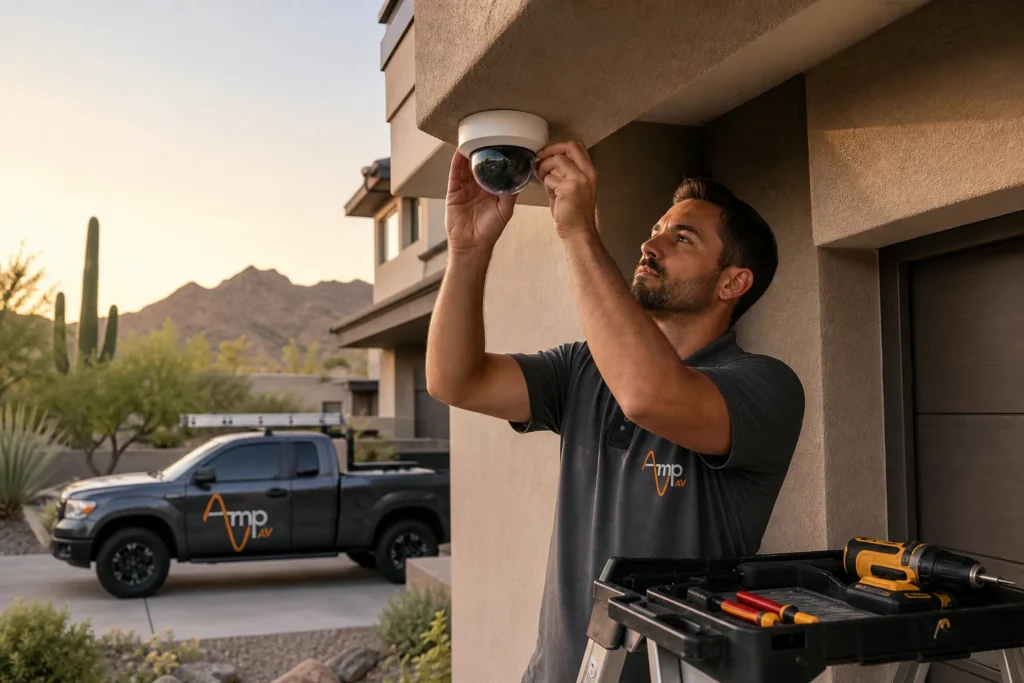
Choosing between wired vs wireless security cameras comes down to your property's layout, budget, and how much control you want over installation. Wired systems offer rock-solid reliability, while wireless options prioritize flexibility and easy DIY placement. Explore our Security Cameras services to see which fits your Phoenix home.
By Amp AV Team, AV Installation Experts
How Wired Security Cameras Work
Wired security cameras connect to a central recorder or network video recorder using a physical cable, typically a Power over Ethernet setup that carries both electricity and data through one line. Because the camera system runs on a dedicated power ethernet cable, you avoid battery swaps and signal interference from neighboring Wi-Fi networks. Many Phoenix homeowners choose wired cameras for detached garages, long driveways, or commercial properties where a stable connection matters more than a fast installation. Cameras wired directly into a structured wiring panel also tend to hold up better in the Arizona heat, since there is no battery pack to degrade under constant sun exposure. For larger properties, running a wired security setup once during construction or a remodel is often cheaper than retrofitting cable later, and it keeps every camera on a single, centrally managed camera system instead of several standalone apps.
How Wireless Security Cameras Work
Wireless security cameras communicate over your home's Wi-Fi network and typically run on battery power or a small solar panel, making them a popular choice for renters, rental properties, or homeowners who want a system installed without drilling into walls. Because wireless cameras do not require a wired connection back to a recorder, they are easier to reposition as your landscaping or entry points change. The tradeoff is that battery life, signal range, and your internet connection all affect how reliably wireless security cameras perform, especially on larger Phoenix properties with thick stucco walls that can weaken a Wi-Fi signal. Most models alert your phone the moment motion is detected, so you still get real-time coverage even without a hardwired connection.
Wired vs Wireless Security Cameras: Pros Cons
Pros Cons at a Glance
Wired security cameras
- Continuous power, no battery to monitor or replace
- More stable video in areas with weak Wi-Fi
- Better suited for a large camera system with many units
Wireless security cameras
- Faster, less invasive installation
- Easier to relocate or expand later
- Lower upfront labor cost in most cases
Choosing between wired vs wireless security cameras often comes down to whether you value long-term reliability or short-term flexibility. Homes with existing structured wiring lean toward wired cameras, while smaller homes or those without existing infrastructure often do better with wireless cameras or a hybrid setup that mixes both. Neither option is universally better, it depends on the property, the budget, and how many entry points need coverage.
Power, Ethernet, and Installation in Phoenix Homes
Installation is where the wired wireless debate really plays out. A wired camera system needs a technician to run cable, usually through an attic or crawlspace, and terminate each line at a power ethernet cable or a PoE switch near the recorder. That labor takes more time upfront but results in a cleaner, more permanent setup with no exposed cords. Wireless cameras skip the cabling entirely: you mount the unit, connect it to your Wi-Fi network, and it is recording within minutes. For most Phoenix homeowners weighing wired wireless options, the decision often hinges on whether the property already has conduit or wiring in place from a previous Home Control system, which can make wired installation far more affordable.
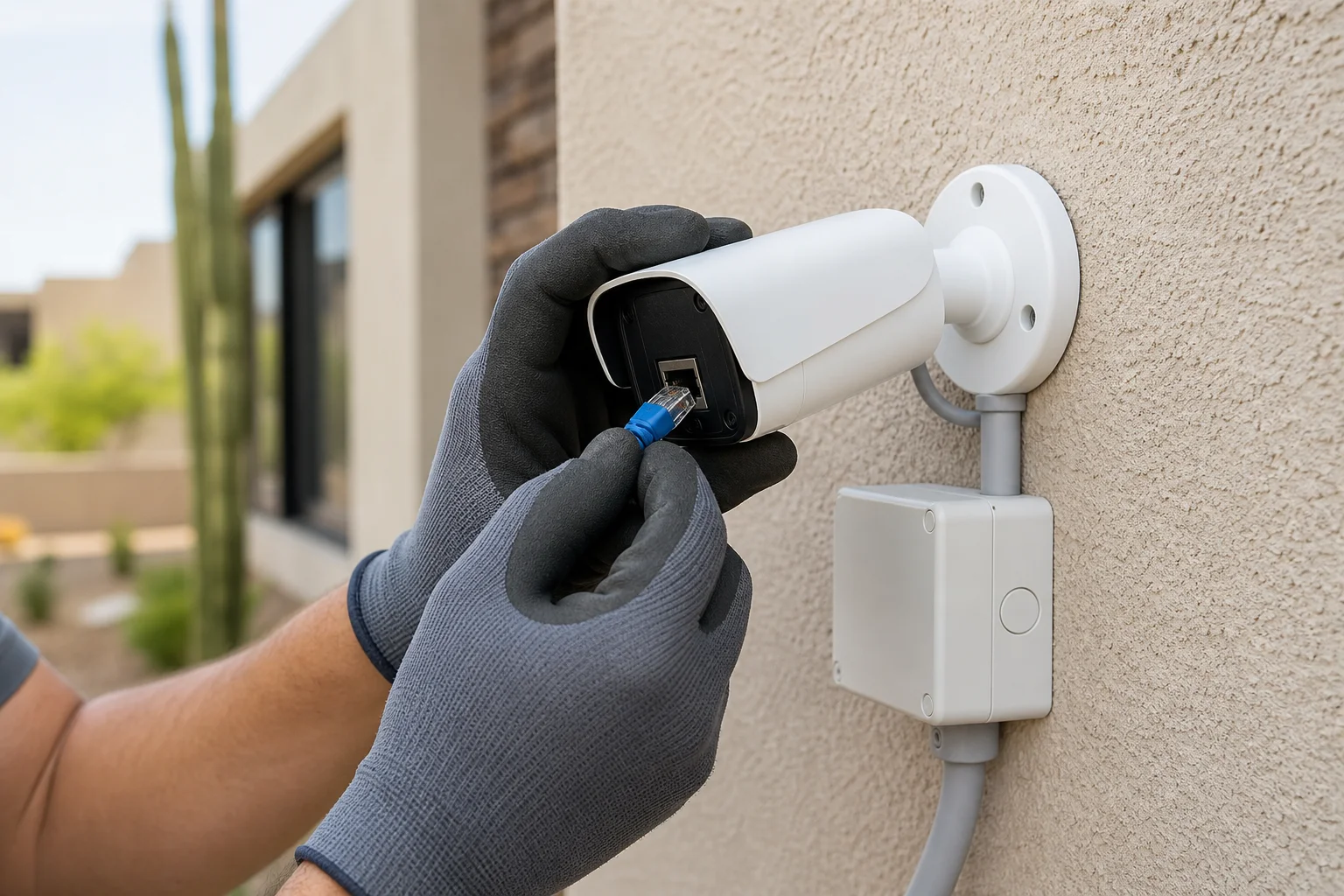
For a closer look at where each camera type performs best, security camera installation guide breaks down placement strategy by room and entry point, along with recommended mounting heights for driveways, doors, and backyards.
Video Quality, Night Vision, and Storage
Both wired and wireless security camera systems have improved considerably in recent years, but there are still real differences in day-to-day performance. Wired cameras generally deliver more consistent video because the signal does not compete with other devices on your network, which matters most for high-resolution footage or a camera system running many units at once. Night vision performance is fairly similar across both categories today, with most modern cameras using infrared LEDs to capture usable video after dark regardless of whether the unit is wired or wireless. Storage is one area where the two diverge: wired systems typically save footage to a local recorder, while wireless cameras often rely on cloud storage subscriptions, which is worth factoring into your long-term cost if you are comparing wired security cameras against a wireless subscription model.
Choosing the Right Camera System for Your Phoenix Property
When it comes to home security, there is no single right answer between wired vs wireless security cameras. If you are building out a larger smart home package, wired cameras usually integrate more cleanly with the rest of your low-voltage wiring. If you are covering a smaller home, guest house, or home business entrance where a simple, self-contained unit makes more sense, wireless cameras get you protection fast without an extensive install. Many of our Phoenix clients end up with a hybrid camera system: wired cameras covering the main house and driveway, wireless cameras added later for guest units, sheds, or seasonal coverage. Pairing your cameras with smart lighting control systems and other automated triggers adds another layer of deterrence after dark. For a broader look at how security cameras fit into a full smart home build, more on complete home technology integration walks through how these systems work together on one app. Whichever direction you lean, a short walkthrough with a licensed installer will save you from buying a camera system that does not match your property's wiring, coverage needs, or budget.
Frequently Asked Questions
Are wired or wireless security cameras better for Arizona heat?
Wired security cameras tend to hold up better in extreme heat because they do not rely on a battery that can degrade faster at high temperatures. Wireless cameras with solar panels can help offset this, but a wired security camera system generally needs less maintenance during Phoenix summers when temperatures regularly exceed 100 degrees.
Do wireless security cameras need a strong Wi-Fi connection?
Yes. Wireless security cameras depend on a stable Wi-Fi connection to send video to your app or cloud storage. Thick stucco walls, long distances from the router, or a crowded network can weaken performance, so a mesh Wi-Fi system or a dedicated access point near each camera often improves reliability.
Can I mix wired and wireless cameras in one camera system?
Yes. Many Phoenix homes use a hybrid approach: wired cameras cover the main house and driveway, while wireless cameras handle detached structures, gates, or areas added later. A hybrid camera system gives you the reliability of wired security where it matters most and the flexibility of wireless coverage everywhere else.
Which option offers better night vision?
Night vision quality depends more on an individual camera's sensor and infrared range than on whether it is wired or wireless. Both wired and wireless security cameras now offer strong low-light and color night vision options, so compare resolution and infrared range rather than connection type when judging video quality after dark.
What is the best choice for a small home business?
For a small home business, wireless security cameras are often the best starting point since they install quickly and do not require rewiring. As the business grows, adding wired cameras for entrances or storage areas can strengthen coverage without replacing the wireless security cameras already in place.
Get a Custom Security Camera Recommendation for Your Home
Every Phoenix property is different, and the right choice between wired vs wireless security cameras depends on your layout, budget, and long-term plans. Contact Us for a walkthrough and a straightforward recommendation built around your home.